

Comparing Areas for Top Outdoor Restaurants in Dubai

Key Takeaways
- Seasonal revenue growth. Market estimates suggest top dining districts in Dubai report a 20% to 35% uplift in transaction volumes during the cooler months from November to April.
- Rent premiums. Pedestrian-friendly developments with curated alfresco dining command up to a 15% rent premium over isolated commercial assets, according to CBRE and JLL market data.
- Infrastructure requirements. Successful outdoor hospitality requires specific technical provisions, including heavy-duty MEP for cooling and durable materials that withstand high humidity.
- Tenant alignment. Institutional developers prioritize operators who drive consistent footfall, treating F&B as a functional amenity that supports office and residential leasing.
- District development. Modern hubs like Dubai Fintech District and Dubai Creative Park use outdoor dining to foster professional networking and creative collaboration.
The Economic Impact of Outdoor Dining on Commercial Districts
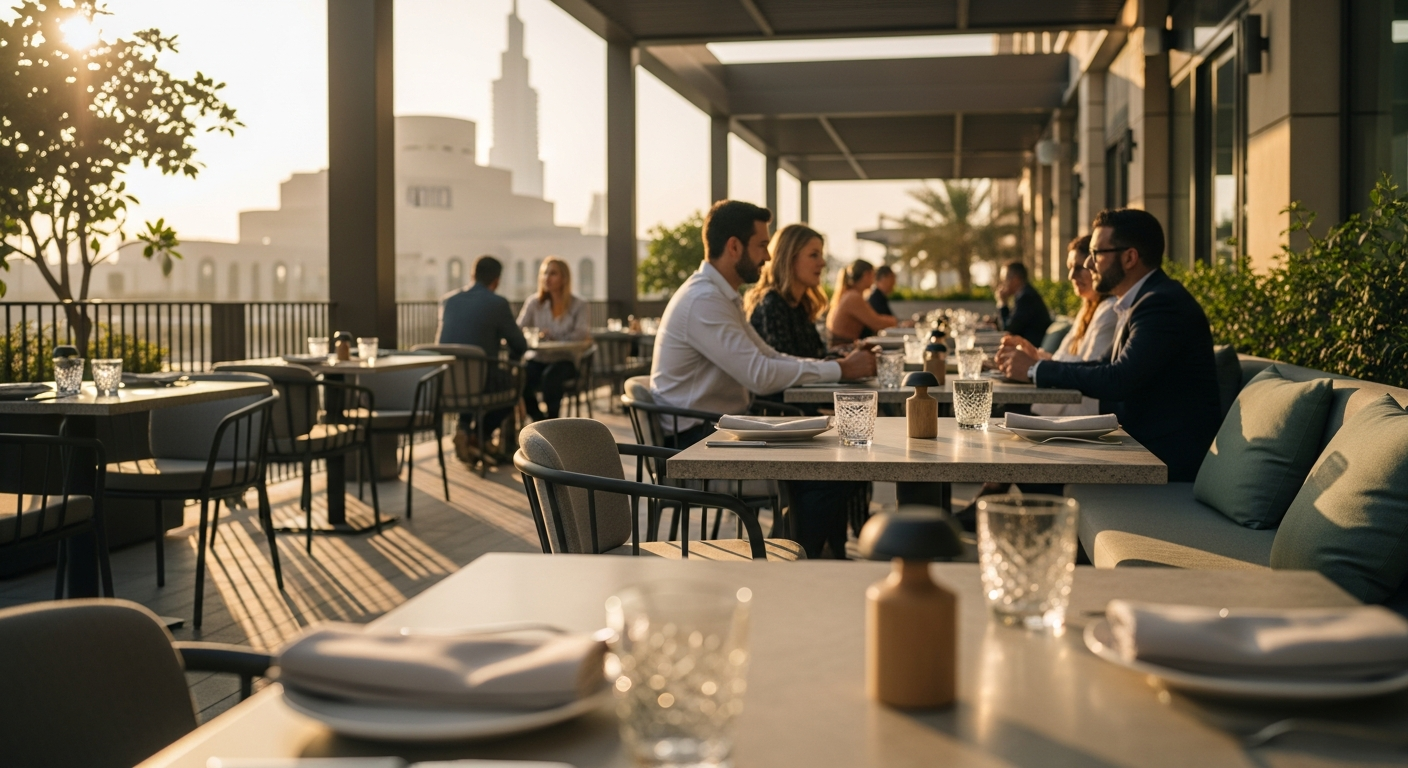
Outdoor dining in Dubai has evolved from a seasonal luxury into a primary driver of commercial asset value. Within high-density areas like DIFC or Jumeirah, the presence of active terraces at outdoor restaurants dubai signals a healthy, occupied district. Data from the Dubai Land Department (DLD) suggests that mixed-use projects with integrated outdoor spaces see higher tenant retention rates in their office sectors.
Institutional developers now view alfresco dining in Dubai as an essential amenity rather than a simple retail lease. Restaurant capacity often increases by 30% during the winter peak, allowing operators to maximize revenue without expanding their indoor footprint. This seasonal boost supports the overall financial health of the district, making the property more attractive to global investors.
Key economic benefits of these spaces include:
- Increased valuation of surrounding retail space.
- Higher footfall during the evening and weekend hours.
- Improved public perception of the district's vibrancy.
We have observed that the transition from traditional malls to open-air lifestyle destinations is accelerating. Buyers and tenants prioritize "third spaces" where they can transition from work to social life without leaving the precinct. One challenge for developers is maintaining this energy during the summer, which requires sophisticated shading and cooling strategies.
Top Prime Outdoor Restaurants to Visit in Dubai
1. Zuma (DIFC)
Zuma remains a high-signal environment for financial professionals and legal consultants operating within the Gate Village. Its outdoor terrace offers a view of the surrounding institutional architecture, making it a preferred location for closing deals or hosting international clients.
The success of this space lies in its seamless connection to the main dining room, maintaining a consistent atmosphere despite the change in environment. For a developer-operator, Zuma represents the importance of prestige and operational reliability in a high-density corporate hub.
2. Nammos (Jumeirah)
Located at the Four Seasons Resort Dubai at Jumeirah Beach, Nammos is a cornerstone of the city's high-growth hospitality sector. It demonstrates how beachfront spatial planning creates durable asset value by blending luxury retail with premium dining.
According to DTCM (Dubai Tourism) reports, destinations like Nammos drive significant foreign direct investment by positioning Dubai as a global lifestyle leader. The outdoor setup is designed to handle high volumes of footfall while maintaining an exclusive feel, which is a difficult operational balance to strike.
3. Shimmers (Madinat Jumeirah)
Shimmers provides a prime example of how proximity to landmarks, specifically the Burj Al Arab, dictates the success of outdoor hospitality infrastructure. The restaurant uses its beachside location to create a unique value proposition that indoor venues cannot replicate.
The management of such spaces involves constant maintenance of materials exposed to salt and humidity. We see this as a benchmark for how build quality and site selection work together to ensure long-term performance.
4. Twiggy by La Cantine (Dubai Creek)
Twiggy by La Cantine has successfully anchored the Park Hyatt Dubai lagoon, showing how waterfront developments can revitalize older districts. Its lagoon-side setting creates a social magnet that attracts visitors from across the city, far beyond the local neighborhood.
The operational reality here involves managing a complex mix of sunbed service and formal dining. As one of the prominent outdoor restaurants dubai, its versatility makes the asset resilient, as it captures different types of spending throughout the day and evening.
Designing Destinations for Long-Term Operational Excellence
Building premium restaurant spaces Dubai requires more than just an attractive view. At Gulfalts, we look at the technical requirements that allow an operator to function at a high level. This includes everything from the durability of floor finishes to the placement of outdoor service stations.
In districts like Dubai Fintech District (DFD), outdoor dining is integrated into the workplace environment. We design these spaces to serve a high-density corporate audience that needs quick lunch options and formal dinner settings in the same precinct. This alignment between the physical space and the tenant's needs is what builds lasting value.
Technical considerations for these spaces include:
- Specialized MEP systems for seasonal climate control.
- High-durability materials resistant to humidity and salinity.
- Modular furniture layouts for flexible professional use.
Dubai Creative Park takes a different approach by using outdoor "social magnets" to encourage collaboration among founders and creatives. The seating clusters are positioned to promote spontaneous meetings, turning a simple cafe terrace into a professional networking hub. Throughout the city, outdoor restaurants dubai serve as essential social hubs that bridge the gap between corporate and lifestyle sectors.
Gulfalts applies institutional discipline to the management of these commercial destinations. By focusing on build quality and tenant-focused design, we ensure that our districts remain productive and attractive across market cycles. Our approach is to build for durability, ensuring that every outdoor space contributes to the overall strength of the asset.
Operators looking for the right footprint and investors seeking stable commercial exposure should view the quality of outdoor infrastructure as a key metric. As Dubai continues to expand its pedestrian-friendly zones, the demand for well-designed alfresco spaces will only increase. Gulfalts remains committed to delivering these high-quality environments across the most promising sectors of the city.


