Key Takeaways
- 100% Foreign ownership. Owners keep full control of their company with no local partner.
- Tax incentives. The UAE Ministry of Economy says qualifying businesses in Dubai Silicon Oasis may pay 0% corporate tax.
- Massive scale. The district covers about 79 million square feet given over to technology and housing.
- Tech-focused network. More than 2,000 companies work in the zone, so there is plenty of scope for networking.
- Integrated lifestyle. Offices sit alongside homes and colleges such as the Rochester Institute of Technology Dubai.
A Community Built for Technology
A business set up in Dubai Silicon Oasis joins a zone built for tech companies to grow and work together. The Dubai Silicon Oasis Authority (DSOA) runs the area and supports everyone from small startups to global corporations. The district is best known for modern electronics and digital innovation.
Its location sets it apart from other parts of the city. It sits where Sheikh Mohammed bin Zayed Road meets Al Ain Road. Staff and goods can move easily between Dubai International Airport and the neighbouring emirates.
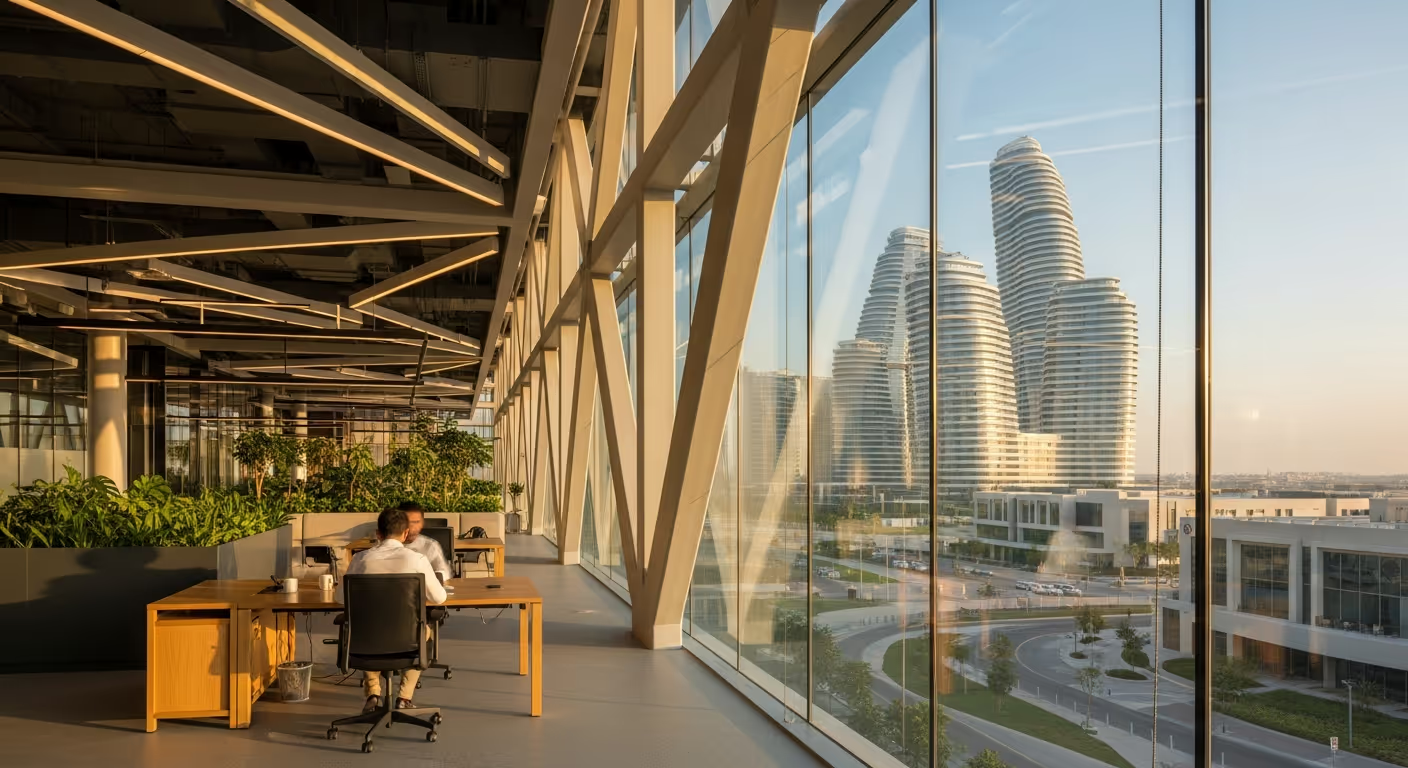
The district is planned so people can live, work and relax in one place. Residential towers, parks and shopping centres stand right next to the office blocks. That helps companies keep good staff, because the commute is often a short walk or drive.
The community's main features are:
- Quick access to major highways like Al Ain Road and Sheikh Mohammed bin Zayed Road.
- The Rochester Institute of Technology on site, which helps with hiring.
- Homes and offices side by side, which cuts travel time.
Financial Advantages of the Free Zone
A company set up in Dubai Silicon Oasis gets clear financial benefits. The biggest is that foreigners can own 100% of their business. No local sponsor is needed, which makes the company's legal structure simpler.
Tax is another big factor. Under current UAE law, businesses in qualifying free zones can pay 0% corporate tax on qualifying income. Check with a tax adviser that your business activities meet the requirements.
Companies can also take all their capital and profits out of the country. Money earned in Dubai can go home without extra fees or government limits. That makes the area attractive to international companies testing the regional market.
The zone's financial incentives include:
- 100% foreign ownership of the company and its assets.
- 0% corporate tax on qualifying income for eligible companies.
- Full repatriation of capital and profits with no currency limits.
Practical Steps for Your Workspace
Finding the right office is a big part of forming a DSO free zone company. The district offers serviced offices, large warehouses and land for custom buildings. Many founders start at the Dubai Technology Entrepreneur Campus (DTEC), the largest tech hub of its kind in the Middle East.
DTEC is the natural first stop for new founders. It covers more than 10,000 square meters. Beyond desk space, it puts people together so ideas are swapped every day. Entrepreneurs can use shared desks, private offices and innovation labs backed by global tech companies. The aim is to make starting easier, so founders can work on their product instead of buying furniture or sorting out utilities.
The quality of a building matters more than its size. Companies now want good commercial buildings with fast internet and reliable power. These are standard in DSO, because its infrastructure was built for high-tech manufacturing and research. Choose a space based on how you will actually work day to day. Some areas suit light industry, while others suit software developers or creative agencies. Your office must match the activity on your free zone business license.
Founders can choose from:
- Serviced offices and ready-to-use desks for startups.
- Light industrial units built for high-tech assembly and manufacturing.
- Large plots set aside for custom headquarters and R&D centres.
The Licensing Process for New Companies
The DSOA has made applying simpler so companies can launch quickly. Most entrepreneurs choose one of three licenses: service, industrial or commercial. Each one sets out exactly what your company may do in the zone.
Compliance matters for long-term success. You need to submit a clear business plan and legal documents for every shareholder. The process is quick, but the DSOA keeps its standards high so that only genuine, capable companies join. Zoning rules can confuse new owners. Some parts of the district are kept for research and development or high-tech assembly. Check these details early to avoid trouble when you renew your license or grow your team.
The license options are:
- Service License for consulting, legal and other professional services.
- Industrial License for manufacturing, processing and assembly.
- Commercial License for importing, exporting and trading specialist goods.
The Evolution of Business Districts
Dubai is moving toward business districts built for particular industries. DSO still leads for general tech, while new areas like Dubai Fintech District serve specific sectors. These districts care about the experience of the people working there, not just about four walls and a desk.
Modern business districts are becoming complete communities built around the people in them. In Dubai, that means more than fast lifts and glass facades. It means wellness facilities too. Newer buildings use biophilic design, bringing in natural light and indoor plants to help productivity and mental health. Smart building technology lets tenants control their space from a phone app, from booking meeting rooms to setting the air conditioning.
Good commercial property in Dubai is no longer just about the building. It is about how the space is managed and the services the people inside receive. Tenants now expect hotel-standard service and surroundings that help them hire the best people. Business districts stay relevant by adapting to what today's workers need. That includes sustainable buildings and digital tools that make running a company easier. The aim is a space where a business stays for a decade, not a single lease.
These districts are changing through:
- Sustainable green building practices and LEED certification.
- Smart city technology that cuts energy use.
- More on-site facilities, including fitness centres and lounges.
Growth Through Quality and Design
The long-term value of a business location depends on how well it is managed. Well-kept buildings designed for particular kinds of company tend to do better over time. The workspace then helps a business grow instead of holding it back.
A business set up in Dubai Silicon Oasis works best when the space fits the company's goals. A software firm needs different things from a light manufacturing plant. Setups that understand this difference go smoothly, and those that do not run into trouble.
GulfALTS builds and operates good commercial destinations that meet these modern standards. It puts the needs of the people using its buildings first, so each district stays a productive place for business. Space that supports long-term success is what drives growth in Dubai's changing economy.
Good management means:
- Routine maintenance of high-tech systems and data connections.
- Well-placed data centres and cooling for tech hardware.
- Flexible floor plans that let teams grow as the business expands.
Priya Nair's Take
The thing I'll be tracking in Dubai Silicon Oasis is whether its tech firms stay as they grow or move to central districts. The free zone benefits are strong, but talent goes where life is good. When I want more than a desk and a commute, my choice is Club 15 inside Dubai Creative Park in Al Quoz, a club I love. I'm also looking forward to Ox Fitness at Dubai Fintech District.