4 Ways the Padel Boom Impacts Commercial Real Estate in Dubai


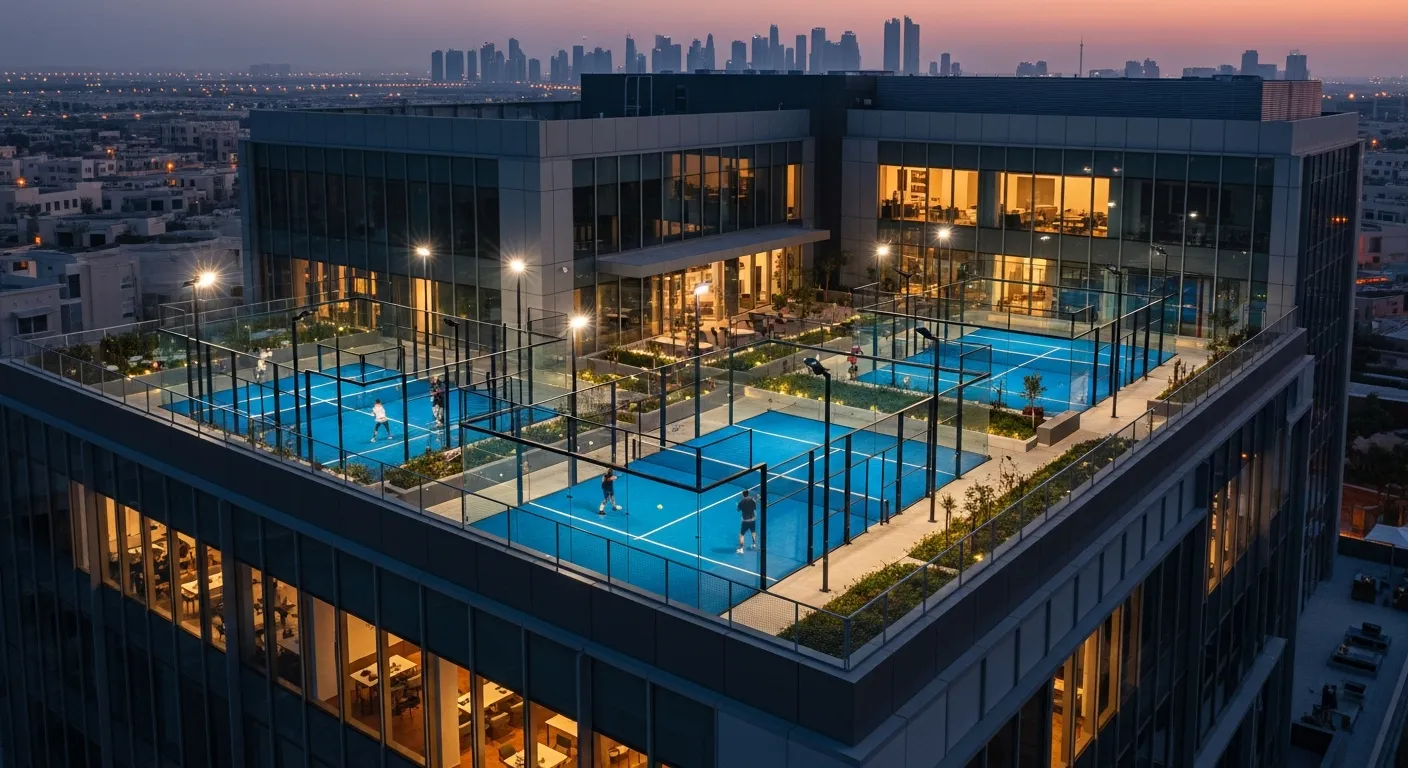
Investors and developers face the challenge of adapting traditional office spaces to meet the rising demand for wellness-centric work environments. This article explores four ways the padel boom dubai commercial real estate trend is driving higher rental yields and property values across the city. You will learn how to use these lifestyle amenities to increase tenant retention and differentiate your investment portfolio in a competitive market.
Key Takeaways
- Portfolio differentiation. High-quality developers use the padel boom dubai commercial real estate trend to distinguish their property portfolios and attract top-tier brands.
- High player retention. According to The Global Padel Report, 92 percent of first-time players return for additional sessions, providing a reliable stream of recurring visitors for the property.
- Revenue generation. A single padel court can generate approximately €80,000 in annual revenue, according to The Global Padel Report, by activating underutilized rooftops or vacant industrial plots.
- Land use efficiency. These sports installations provide four times the financial return per square meter when compared to traditional tennis facilities.
- Increased visitor engagement. Integrating fitness amenities into professional environments drives materially higher visitor engagement than generic business parks.
Analyzing the Padel Phenomenon in Dubai’s Commercial Districts
How is padel changing commercial real estate in Dubai?
Padel is transforming Dubai commercial real estate by shifting assets from passive office shells into high-engagement lifestyle destinations. By integrating wellness facilities, developers like GulfALTS create amenity-rich clusters that attract high-value tenants. This transition drives higher rental premiums and longer lease terms, as modern businesses prioritize environments that support employee health and informal networking.
The integration of padel into professional zones represents a structural shift in how commercial space is valued and utilized across the city.
- Lifestyle-Driven Activation: Padel courts serve as a primary tool for activating underutilized land, turning static commercial zones into vibrant social hubs. This shift moves away from traditional desk-heavy layouts toward mixed-use environments that prioritize human interaction and physical activity.
- Premium Rental Yields: Districts offering integrated sports amenities command significant rental premiums, particularly among creative and fintech firms. High demand for these facilities ensures that nearby office units maintain higher occupancy rates and attract tenants willing to pay for premium lifestyle integration.
- Extended Tenant Retention: Data indicates that commercial clusters featuring wellness amenities see longer average lease terms compared to generic office blocks. Corporate tenants are more likely to renew when their workspace provides built-in networking opportunities and consistent footfall from health-conscious professionals.
- Institutional Asset Differentiation: High-quality developers use the padel boom dubai commercial real estate trend to differentiate their portfolios in a crowded market. Projects like Dubai Creative Park utilize wellness as a core pillar to attract top-tier brands and ensure long-term asset value through diversified revenue streams and high-quality build standards.
4 Key Impacts of Padel on Commercial Property Value
1. High-Footfall Destination Magnetism

High-Footfall Destination Magnetism serves as a low-initial costs, high-impact tool to pull diverse B2B and B2C audiences into commercial districts. These installations drive consistent daily traffic that is essential for supporting onsite retail and ancillary services. Data from The Global Padel Report indicates that 92% of first-time players return for additional sessions, creating a reliable stream of recurring visitors for the property.
2. Evolution of Corporate Networking Spaces

Evolution of Corporate Networking Spaces reflects the ongoing shift from traditional golf to more accessible, social sports for business development. Modern professionals favor facilities located adjacent to hubs like Dubai Creative Park for midday meetings and team-building exercises. This proximity allows companies to integrate wellness and networking into the standard workday, increasing the utility of the office location.
3. Strategic Repurposing of Industrial Land

Strategic Repurposing of Industrial Land enables developers to transform warehouse rooftops and vacant plots into high-yield revenue streams. By activating underutilized space, owners can maximize revenue per square foot without heavy structural investments. These courts can generate approximately €80,000 annually per unit, according to The Global Padel Report, delivering four times the return per square meter compared to traditional tennis facilities. However, developers must account for challenges such as high initial installation costs and noise management in dense commercial zones.
4. Enhanced ROI through Mixed-Use Integration

Enhanced ROI through Mixed-Use Integration combines fitness amenities with professional environments to drive materially higher visitor engagement than generic business parks. GulfALTS uses this strategy to increase tenant retention and justify rental premiums for high-conviction commercial assets. This disciplined approach to asset management ensures that destinations remain attractive to high-quality investors seeking durable, dollar-linked rental income.
Leasing and Operator Opportunities in Wellness Destinations
Why are developers adding padel courts to Dubai real estate?
Developers integrate padel courts into Dubai real estate to maximize site activity and generate higher returns per square meter compared to traditional sports facilities. These courts act as lifestyle anchors that attract recurring footfall from high-value tenants and residents. By embedding wellness amenities, developers increase property desirability and secure long-term occupancy in competitive commercial districts.
GulfALTS adopts this strategy to ensure commercial assets remain productive and consistent with high-quality investment standards. Market data from The Global Padel Report indicates that well-managed padel clubs generate roughly €80,000 per court annually, delivering significantly higher revenue density than traditional tennis courts. This operator-led approach transforms available land or industrial rooftops into high-yield destinations that support the health of the broader commercial ecosystem.
Corporate demand for health-integrated workspaces forces a shift toward amenity-rich developments that prioritize employee retention. Developers who lead with sports facilities often see increased interest from international firms that view wellness as a requirement rather than a luxury. This transition from passive office blocks to active lifestyle hubs provides a durable competitive edge in the Dubai market.
Is padel a good real estate activation tool in Dubai?
Padel is an effective real estate activation tool because it converts underutilized space into high-engagement destinations with a 92% player retention rate, according to The Global Padel Report. In Dubai, high-quality developers use these facilities to drive footfall to adjacent F&B and retail outlets. This creates a self-sustaining environment where sports activity directly supports commercial tenant performance and long-term asset value.
Professional operators seek long-term stability in managed destinations like Dubai Creative Park, a 500,000 sq ft wellness and fitness destination designed around sports, fitness, wellness, and curated lifestyle uses. GulfALTS integrates fitness as a core portfolio pillar to attract elite tenants who value managed, premium environments over generic warehouse space. Wellness-centric zoning creates a specific link where sports facilities, F&B brands, and creative professionals benefit from shared footfall and a focused professional atmosphere.
This integration reduces tenant churn by providing a built-in community that extends beyond the standard workday. By creating reasons for people to remain on-site after hours, developers maximize the utility and revenue potential of every square foot. Such strong operations ensures that commercial assets remain resilient and attractive to global capital allocators.




.svg)