Comparing the Best Areas for Car Showrooms in Dubai


Key Takeaways
- Sheikh Zayed Road acts as one of the primary high-visibility corridors and is among the best areas for car showrooms in dubai because it provides exposure to 1.2 million daily vehicle passes according to RTA 2025 traffic analytics.
- High volume distribution is concentrated in Ras Al Khor district, which contains more than 1,000 showrooms and generates approximately 40% of all used car listings in the city as reported in the Alba Cars Q1 2026 Report.
- Logistical connectivity is fundamental to the industry, as roughly 90% of automotive inventory deliveries in the region rely on Al Khail Road and Sheikh Mohammed Bin Zayed Road transport corridors.
- Premium demand has increased significantly, with space requirements in V8 District growing by 30% in early 2026 as the location shifted toward high-end boutique brands.
- Pricing standards are clearly defined, with rental rates for prime showroom space near the city center typically ranging from AED 350 to 500 per square meter per month according to the Dubai Real Estate Index Q1 2026.

Strategic Factors for Dubai Automotive Showroom Locations
Identifying the best areas for car showrooms in dubai requires balancing high-visibility branding with operational zoning logic. The market is segmented between high-exposure corridors and specialized industrial-commercial hubs. This analysis breaks down the strategic variables you need to evaluate before signing a long-term lease.
Where is the car market in Dubai?
The car market in Dubai is concentrated along major arterial roads and dedicated industrial-commercial zones. High-end retail thrives on Sheikh Zayed Road (E11), while volume trading and specialized servicing center in Al Quoz and Ras Al Khor. These districts offer the necessary infrastructure for vehicle logistics, RTA compliance, and high-frequency customer footfall.
Successful placement depends on understanding how traffic flow and regulations dictate business performance.
- Visibility metrics. Sheikh Zayed Road attracts over 1.2 million daily vehicle passes according to RTA 2025 traffic analytics, offering unparalleled brand exposure for luxury flagship showrooms catering to high-net-worth commuters.
- Logistical proximity. Locations near Al Khail Road (E44) and Sheikh Mohammed Bin Zayed Road (E311) facilitate faster inventory movement, as 90% of showroom deliveries use these critical transport corridors.
- Zoning regulations. Dubai Municipality separates commercial retail from heavy industrial servicing. Operators must select plots that legally allow both high-end vehicle displays and the technical workshops required for pre-delivery inspections.
- Retail typology. Brands must choose between corridor retail for mass visibility and destination retail. Specialized zones like GulfALTS' V8 District prioritize customer dwell time and community engagement over simple road frontage.
Where is the biggest car market?
The biggest car market in Dubai is Ras Al Khor, also known as Aweer. This district hosts over 1,000 showrooms and accounts for roughly 40% of all used car listings in the emirate as reported in the Alba Cars Q1 2026 Report. It serves as the primary hub for volume traders, export operators, and the mass-market pre-owned vehicle segment.
This area features a 2.5 km stretch of automotive businesses along Al Asayel Street, creating a massive ecosystem for buyers. Toyota and Nissan represent approximately 50% of the sales volume here, driven by constant demand for GCC-spec SUVs. While Ras Al Khor handles the highest volume, modern dealers are increasingly seeking managed, institutional-grade spaces to ensure long-term operational reliability.
Top Locations and best areas for car showrooms in dubai
1. Sheikh Zayed Road (SZR)
Sheikh Zayed Road represents the global standard for flagship automotive presence. It delivers exposure to 1.2 million daily vehicle passes according to RTA 2025 traffic analytics and some of the world's most affluent commuters. Rents average between AED 350 and 500 per square meter per month for prime retail space near DIFC according to the Dubai Real Estate Index Q1 2026.
Most premier dealerships cluster near downtown to capture high-net-worth traffic. This visibility justifies the premium overhead for top-tier global brands.
2. Ras Al Khor (Aweer)
Ras Al Khor functions as the primary volume market, hosting more than 1,000 showrooms along a 2.5 km stretch. It currently accounts for nearly 40% of all used car listings in the emirate as reported in the Alba Cars Q1 2026 Report. Buyers flock here for the density of GCC-spec vehicles, particularly within the SUV and sedan categories.
Al Asayel Street forms the spine of this district, creating a centralized ecosystem for budget-conscious traders. Most inventory deliveries in the city originate from this logistical core.
3. Al Quoz
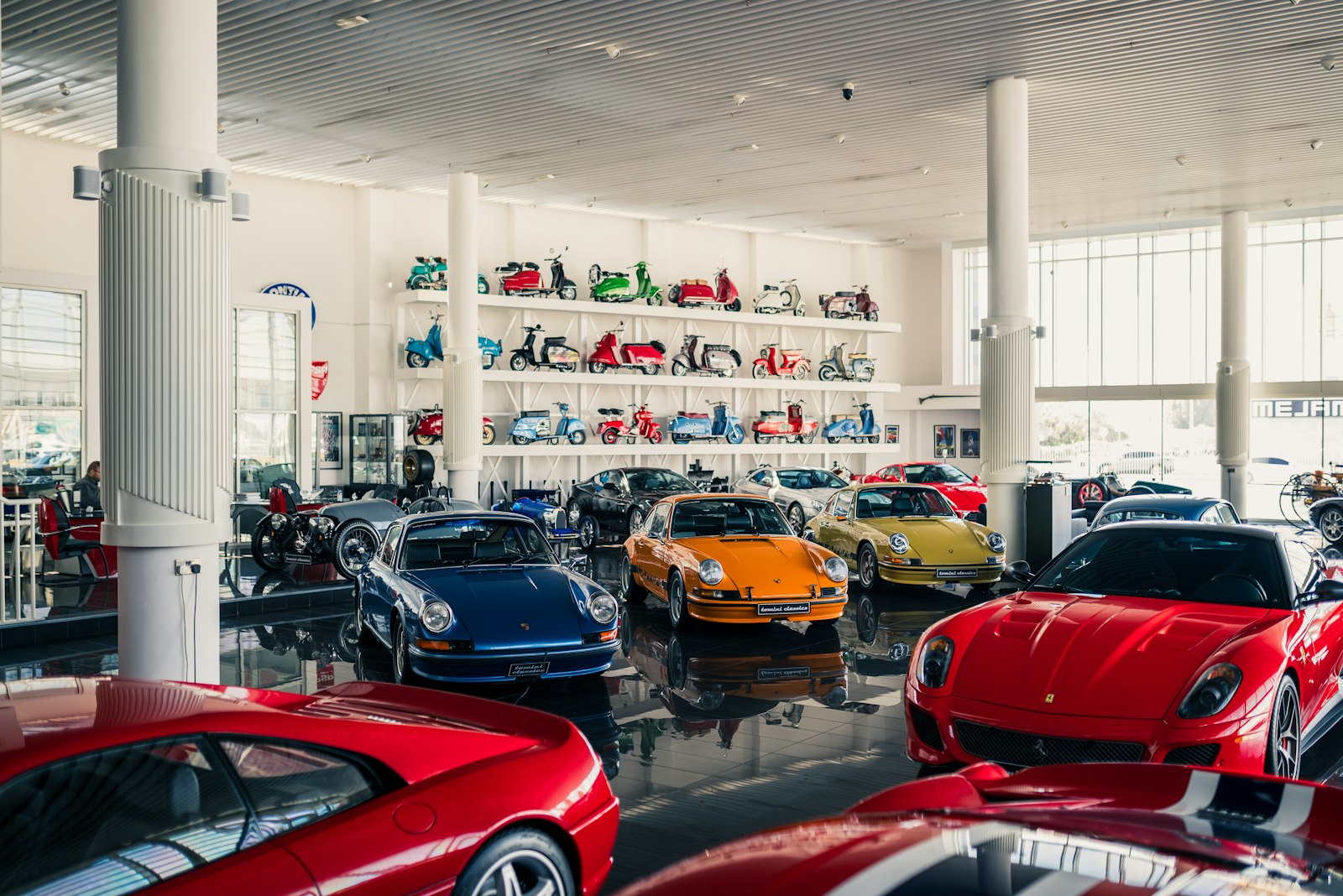
Al Quoz caters to the luxury and experiential segment of the market. The area merges automotive retail with lifestyle spaces like cafes and galleries, and has transitioned from industrial use toward a premium automotive hub. Demand for space here grew by 30% in early 2026.
4. V8 District
V8 District is the institutional-grade automotive destination GulfALTS designed for high-end boutique brands and specialized collectors. It anchors the luxury segment within Al Quoz, pairing showroom space with curated lifestyle amenities. GulfALTS ensures these assets meet RTA-compliant standards for high-value vehicle display and security.
5. Dubai Investment Park (DIP)
Dubai Investment Park provides a strategic alternative for large-scale logistics and distribution hubs. Operators choose this area for its relative cost-effectiveness and proximity to Al Maktoum International Airport. It is a preferred site for businesses managing massive inventories that require institutional management and 24/7 facility support.
Sixty-five percent of new showrooms built in 2025 used intersections along the E311 and E44 corridors for better connectivity. DIP serves as a key node for these regional transport links.
Emerging Trends in the Dubai Automotive Real Estate Market
Which industry is booming in Dubai?
Automotive real estate is currently the fastest-growing sub-sector in Dubai's commercial property market, recording 18% year-on-year rental growth as documented by the Dubai Real Estate Index Q1 2026. This surge is driven by a convergence of high-net-worth migration, the expansion of the electric vehicle sector, and a deepening demand for institutional-grade showrooms that provide more than basic floor space.
Beyond traditional sales, the luxury pre-owned segment grew by 30% recently according to the Alba Cars Q1 2026 Report, attracting global players to specialized hubs. Operators require specialized infrastructure to support this growth, moving away from fragmented private ownership toward professionalized assets that offer long-term lease stability.
How is the automotive retail model changing?
The Dubai automotive retail model is shifting from transactional dealerships to experiential auto-tainment hubs that integrate retail with lifestyle amenities. Modern showrooms now feature VR configurators, premium cafes, and community lounges to increase dwell time. This transition requires sophisticated infrastructure capable of supporting electric vehicle charging and high-end technical maintenance.
Specialized districts like V8 District in Al Quoz exemplify this trend by combining technical servicing with a curated lifestyle environment. GulfALTS designs these spaces to meet RTA-compliant standards while ensuring 24/7 maintenance for high-value inventory.
Institutional-grade management is now a baseline requirement for operators seeking to maintain brand consistency and operational uptime. These managed environments provide the technical foundations, such as high-capacity lifts and specialized drainage, that modern electric and performance vehicle brands require.




.svg)